South Africa Anti-Immigrant Protests Turn Violent as 24 Vehicles Are Torched
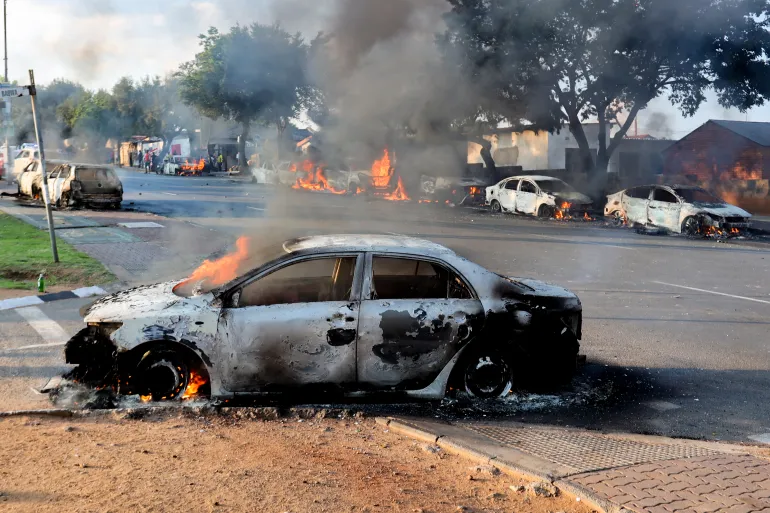
A car burns on the street while people rush to remove goods from a shop. Elsewhere, foreign owned businesses are being looted as police move in to disperse angry protesters.
These were scenes from South Africa on Thursday, October 8, as anti immigrant demonstrations turned violent in Soweto, Johannesburg, and the coastal city of Durban.
At least 24 vehicles were set on fire across the two cities, while shops owned by foreign nationals were targeted. Three people were arrested in Durban, according to acting national police commissioner Lieutenant General Puleng Dimpane.
In Soweto, a Reuters reporter witnessed residents carrying groceries out of a shop reportedly owned by a Somali national, who had been chased away. The group fled when police arrived.
In Durban, reporters witnessed burned vehicles and looted foreign owned shops. Police also fired rubber bullets to disperse protesters.
The court ruling behind the protests
The demonstrations were driven by opposition to a July 2026 Constitutional Court decision that removed certain procedural barriers preventing people from applying for asylum.
The ruling affects people who entered South Africa irregularly, did not have asylum transit visas, or missed reporting deadlines.
Protesters have been demanding that refugee centres stop processing asylum applications, while wider anti immigrant campaigns have called for undocumented foreign nationals to leave the country.
However, the South African government says the court ruling has been misrepresented.
Government spokesperson William Baloyi said false information about the decision had contributed to the violence.
He stressed that the ruling did not automatically grant undocumented migrants refugee status, permanent residence, or other legal rights.
Government faces pressure over asylum applications
The unrest comes as South Africa's asylum processing offices struggle to handle a growing number of applications following the implementation of the court decision.
The government's Inter Ministerial Committee on Migration held an urgent briefing on Thursday to address overcrowding at asylum offices. A day earlier, the committee had reported that its offices were overwhelmed by incoming applications.
Acting national police commissioner Dimpane warned that authorities would not tolerate the destruction of property or attacks on people, saying those responsible for torching vehicles would be pursued and arrested.
No injuries were reported in the Soweto incident at the time of the initial reports, although police were checking whether additional vehicles had been burned.
A deeper struggle over jobs and immigration
South Africa has experienced months of protests targeting undocumented foreign nationals, with some demonstrations escalating into threats and violence. The tensions have also contributed to tens of thousands of migrants fleeing the country, with some returning home through repatriation programmes.
The anger is unfolding against a difficult economic background. South Africa remains deeply unequal, with roughly one in three people unemployed. Migrants are frequently blamed for taking jobs, contributing to crime, and putting pressure on public services, although these broad claims are not supported by evidence.
The latest violence has renewed concerns about the safety of foreign nationals and the potential consequences of misinformation surrounding immigration laws.
For now, authorities face the challenge of restoring order while addressing pressure on asylum services and clarifying what the Constitutional Court ruling actually means.