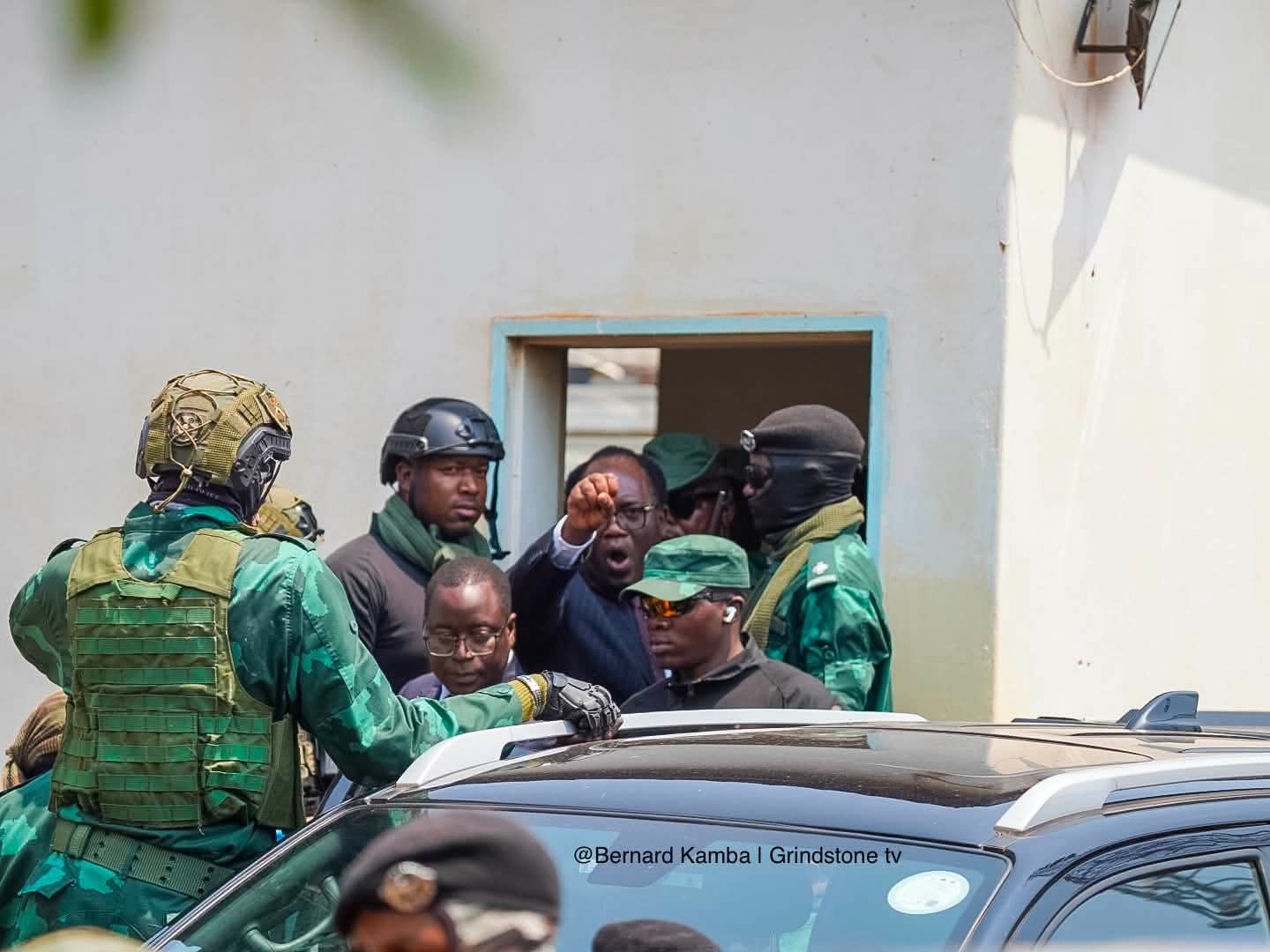
SOLWEZI COURT REFERS MUNDUBILE AND ZULU SEDITION CASE TO HIGH COURT
The sedition case involving 2026 presidential candidate Brian Mundubile and his running mate, Makebi Zulu, has taken a new turn after the Solwezi Magistrates’ Court declined jurisdiction to hear the matter.
Principal Resident Magistrate Mambwe Mukonde referred the case to the High Court for further determination after the defence challenged whether the proceedings should have been taking place in Solwezi in the first place.
The defence argued that the alleged offences were committed in Lusaka, raising questions about the appropriate court to handle the case.
THE JURISDICTIONAL BATTLE
During the proceedings, the defence team, led by lawyer Bonaventure Mutale, challenged the Solwezi court’s authority to hear the two counts of sedition.
The lawyers also sought permission for Mundubile and Zulu to give oral evidence in support of their application.
However, Director of Public Prosecutions Gilbert Phiri opposed the request, arguing that there was no legal basis for it and that the issues could be addressed through documentary evidence, including the accused persons’ warn and caution statements.
In her ruling, Magistrate Mukonde noted that the State had not disputed the contents of the statements or the defence’s position that the alleged offences occurred in Lusaka.
Citing provisions of the Subordinate Courts Act, she held that the High Court had jurisdiction to hear the matter. However, she clarified that she could not determine whether the case should specifically be heard in Lusaka.
SINKAMBA WELCOMES THE RULING
Green Party President and Tonse Alliance Chairperson Peter Sinkamba welcomed the decision, describing it as fair.
Mr Sinkamba argued that if the prosecution’s records established that the alleged offences occurred in Lusaka, the case should be heard there.
He also maintained that the magistrate had correctly handled the jurisdictional challenge but lacked the authority to transfer the case directly to another subordinate court in Lusaka.
According to Mr Sinkamba, the High Court must first determine the appropriate jurisdiction before the matter can proceed before a competent court.
He further commended Magistrate Mukonde for considering applications raised by both the prosecution and the defence.
Mr Sinkamba recalled that the court had initially allocated two days for trial, but preliminary objections and other applications had to be resolved before the substantive proceedings could begin.
He expressed confidence that the High Court would maintain the same level of case management as the matter moves forward.
WHAT HAPPENS NEXT?
The referral means the jurisdictional question must be addressed before the case can proceed in the appropriate court.
However, the ruling does not determine whether Mundubile and Zulu are guilty or innocent of the charges they face. It concerns the court's authority to hear the matter.
The case is expected to proceed before the High Court for further determination, with the question of where the substantive proceedings should take place remaining central to the next stage.